Spending time on the water puts gear through its paces in ways that dry land never does. UV exposure, salt spray, constant moisture, the occasional full submersion — most watch straps aren’t built for any of it. The right one handles all of it without deteriorating, without smelling, and without looking like an afterthought.
Here’s what actually works on the water, and why.
The problem with most watch straps on the water
Standard leather watch straps — the default on most dress and field watches — absorb moisture and salt. Once saturated, full-grain leather stiffens, cracks along the edges, and develops an odour that doesn’t wash out. Even quality leather that looks good on land degrades quickly with regular water exposure.
Nylon straps are better — they dry quickly and resist moisture — but standard nylon loses colour under sustained UV exposure and the hardware corrodes in salt environments over time.
The materials that genuinely hold up on the water are sailcloth, FKM rubber, and canvas. Each has specific strengths depending on how you spend time on the water.
Sailcloth — the material built for exactly this
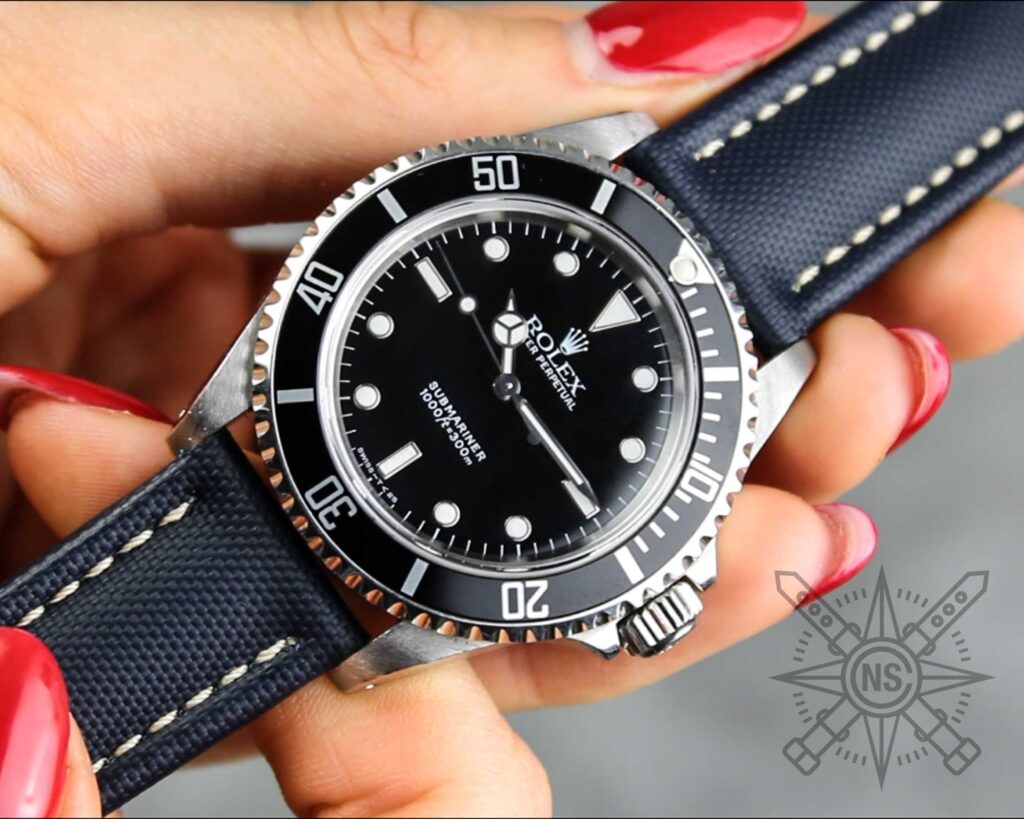
Sailcloth watch straps are made from the same high-tenacity polyester used in racing sails — a material engineered specifically to handle UV exposure, salt spray, and sustained tension without degrading. It doesn’t absorb moisture the way leather or standard nylon does. It dries quickly. The texture is distinctive — woven and slightly rough to the touch — and it holds colour well under sun exposure.
The flat construction of a quality sailcloth watch strap sits low on the wrist without the bulk of padded alternatives. On a diver or a field watch, it reads as purposeful rather than sporty — the kind of strap that looks like it earned its place rather than being chosen for aesthetics alone.
For sailors specifically, sailcloth carries an authenticity that other materials don’t. The material is part of the environment — wearing it on your wrist while it’s overhead in the rigging is the kind of detail that makes sense to anyone who spends time around boats.
FKM rubber — the waterproof choice
FKM rubber — also called fluorocarbon rubber — is the material of choice for serious water sports and diving. It’s completely waterproof, resistant to salt and chlorine, and doesn’t deteriorate under UV exposure. It wipes clean instantly and never absorbs odour.
The tradeoff is feel — rubber sits differently on the wrist than textile materials, and in warmer conditions it can feel warmer against the skin. For fishing, kayaking, or any activity where the watch is likely to be fully submerged repeatedly, rubber watch straps are the practical choice.
FKM specifically outperforms standard silicone rubber in durability and heat resistance — important for anyone fishing in direct sun or sailing in warm climates.
Canvas — the casual water option
Canvas watch straps handle light water exposure well — spray, rain, splashes — without the technical feel of rubber or the specificity of sailcloth. A canvas strap on a field watch or a vintage diver suits the aesthetic of recreational boating without looking like you’ve over-engineered your wrist.
Canvas absorbs moisture more than sailcloth or rubber but dries reasonably quickly. For freshwater use and casual coastal boating it performs well. For regular salt water exposure or heavy use, sailcloth or rubber is the better long-term choice.
What to avoid on the water
Full-grain leather deteriorates with salt and moisture exposure — even quality leather. It’s the wrong material for regular water use regardless of how well it’s made.
Standard nylon straps handle moisture better than leather but the hardware — typically stainless steel — corrodes in salt environments over time. The strap itself survives, the buckle and keepers don’t always.
Suede is the most water-sensitive material available — it stains, shrinks and loses texture with any significant moisture. Keep suede straps for dry land.
The practical recommendation
For most boaters — one sailcloth strap and one rubber strap covers every situation. Sailcloth for sailing days, coastal walks, and casual time on the water. Rubber for fishing, diving, kayaking, or any activity where the watch is going under.
Both materials are available across standard lug widths — 18mm through 22mm — and both clean up easily after a day on the water. The investment is minimal compared to the cost of replacing deteriorated leather straps every season.