Lithium batteries have become a practical option for many boats that need dependable onboard electricity without the weight of a large lead-acid battery bank.
Most marine lithium systems use lithium iron phosphate, commonly called LiFePO4, because it offers long cycle life, stable voltage, and good thermal stability.
Still, switching from lead-acid to lithium is not always as simple as replacing one battery with another. Charging equipment, operating temperature, current demand, battery management, and installation all need attention. Understanding these points helps boat owners choose the right setup and avoid costly mistakes.
Why Lithium Batteries Work Well on Boats
Lithium batteries differ from flooded lead-acid and AGM batteries in several practical ways. Weight, usable capacity, charging behavior, and voltage stability are among the most important differences for boat owners.
Lower Weight and Greater Usable Capacity
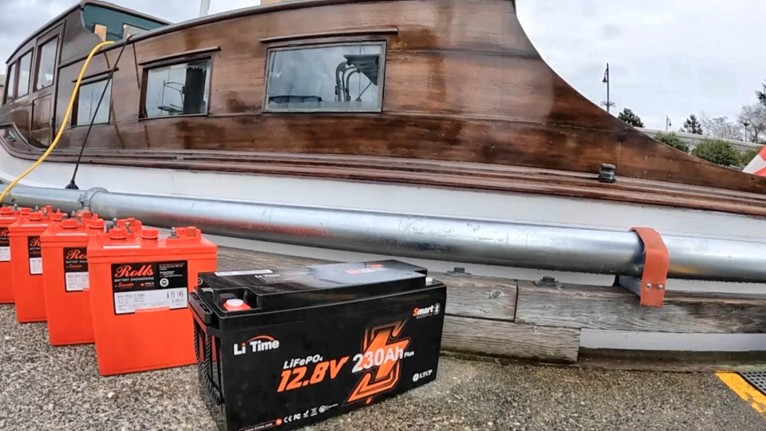
LiFePO4 batteries are generally lighter than lead-acid batteries with a similar rated capacity. This can be especially useful on fishing boats and smaller vessels where battery weight affects balance, storage space, and overall load.
Lithium batteries can also normally be discharged more deeply during routine use, as long as the manufacturer’s operating limits are followed. That means a larger portion of the rated capacity may be available for actual use.
A properly sized marine lithium battery can therefore support equipment such as trolling motors, fish finders, pumps, navigation electronics, refrigeration, cabin lighting, and communication devices for extended periods.
Capacity alone should not decide the purchase, though. Owners should also check voltage, maximum continuous current, surge current, and the expected electrical demand of the boat.
Stable Voltage During Use
LiFePO4 batteries maintain relatively steady voltage through much of their discharge cycle. Motors and electronics therefore receive more consistent voltage until the battery approaches its lower operating limit.
That behavior can make voltage readings less useful for estimating remaining charge. A battery monitor that measures energy entering and leaving the battery can provide a clearer picture of available capacity.
How Long Do Marine Lithium Batteries Last?
Battery lifespan depends on much more than the number printed on a product specification sheet. Charging habits, discharge depth, temperature, storage conditions, and electrical load all influence how long a battery remains useful.
Understanding Cycle Life
Cycle life refers to the number of charge-and-discharge cycles a battery can complete before its usable capacity falls to a specified level.
Many LiFePO4 batteries are designed for thousands of cycles, but exact figures vary between products and test conditions. Repeatedly discharging a battery close to its lower limit may also affect longevity differently than using only part of its available capacity.
When comparing batteries, check:
- Stated cycle life
- Depth of discharge used during testing
- Remaining capacity at the stated end of life
- Temperature conditions used during testing
Without this context, two cycle-life figures may look similar while representing very different testing conditions.
Temperature and Storage Matter
Lithium batteries continue to age even when they are not completing full cycles. High temperatures can speed up aging, while very low temperatures can create charging problems.
Charging LiFePO4 cells below the permitted temperature range can damage them. Some batteries include automatic low-temperature charging protection, while others rely on the charger or external control equipment.
For seasonal storage, follow the manufacturer’s instructions for state of charge and temperature rather than applying storage practices designed for flooded lead-acid batteries.
What Makes a Lithium Battery System Safe?
LiFePO4 chemistry has good thermal stability, but battery chemistry is only one part of safe operation. Charging equipment, wiring, protective devices, battery location, and current limits all matter.
Check the Battery Management System
Most marine lithium batteries include a battery management system, usually called a BMS. It monitors battery conditions and can interrupt operation if certain limits are exceeded.
Depending on the model, protection may cover:
- Excessive charging voltage
- Excessive discharge
- High current
- Short circuits
- High temperature
- Low-temperature charging
Not every BMS offers identical protection. Checking the actual specifications is more reliable than assuming every lithium battery includes the same safeguards.
Use Compatible Charging Equipment
Lithium and lead-acid batteries have different charging requirements. A charger intended only for conventional batteries may use settings that are not suitable for LiFePO4 cells.
Alternator charging also deserves attention. Lithium batteries can accept relatively high charging current, which may place more demand on an alternator designed around lead-acid batteries.
Some installations may therefore require a DC-to-DC charger or another method of controlling charging current.
Check Wiring and Circuit Protection
Large battery banks can deliver substantial current, so correct cable sizing matters. Cable length, current demand, and expected load should all be considered.
A safe installation should also include suitable fuses, battery disconnect switches, protected terminals, and secure mounting. Professional advice can be useful when an upgrade also involves inverters, alternators, shore chargers, or other high-current equipment.
Where Marine Lithium Batteries Are Commonly Used
Lithium batteries can support many onboard systems, but the correct battery depends on the job it needs to perform.
Trolling Motors and Fishing Electronics
Trolling motors often operate for long periods, making usable capacity and battery weight important.
Fishing boats may also rely on batteries for sonar, GPS equipment, livewell pumps, and other electronics. Battery-bank voltage must match the equipment, especially with trolling motors designed for specific voltage systems.
House Battery Banks
Cruising boats use stored electricity for refrigeration, lights, pumps, communications, and navigation systems.
Before choosing battery capacity, owners should complete a simple energy audit. List each device, its current draw, and the estimated number of hours it runs each day.
This provides a more useful capacity estimate than choosing a battery solely according to boat size.
Engine Starting
Not every lithium battery is designed to start an engine.
Starter motors can demand high current for a short period. Both the battery cells and BMS must be rated for that load. A deep-cycle lithium battery should not automatically be treated as a replacement for a dedicated starter battery.
Electric Propulsion
Electric propulsion places much higher demands on a battery system than ordinary onboard electronics.
Battery voltage, capacity, motor requirements, cabling, circuit protection, charging equipment, and current limits must all work together. These installations should be planned as complete electrical systems rather than as simple battery replacements.
Common Mistakes to Avoid
Lithium batteries perform best when owners look beyond capacity and price. Several common mistakes can create reliability or safety problems.
Avoid:
- Using charging settings that do not match the battery
- Assuming every lithium battery can start an engine
- Ignoring low-temperature charging restrictions
- Using undersized cables
- Skipping suitable fuses or disconnects
- Comparing batteries only by amp-hour rating
- Replacing lead-acid batteries without checking alternator requirements
Checking these points before installation can prevent problems once the boat is on the water.
Conclusion
Marine lithium batteries can provide lower weight, greater usable capacity, stable voltage, and long cycle life when they are correctly selected and installed. These qualities can make them suitable for trolling motors, electronics, house banks, and some starting or propulsion applications.
The key is to treat the battery as part of the boat’s complete electrical system. Capacity, current demand, charging equipment, temperature limits, BMS protection, wiring, and installation should all work together. A little planning before installation can lead to a safer, more dependable battery setup.