The alarm goes off at 4:45 AM, and I’m wide awake before the second beep. There’s a particular kind of excitement you get when you know you’re about to spend the whole day on the water; the kind that overrides sleep deprivation every time. I’m heading down to the boat ramp as the sun’s still thinking about coming up, thermos of coffee in hand, and I’m already running through the mental checklist: engine, fuel, gear, ice.
By 5:30, I’ve got the truck backed down and the 25-foot center console is prepped and ready. There’s something satisfying about how straightforward this boat is to check. Everything is accessible, with nothing hidden behind complicated design. That’s been the thing about center consoles that keeps pulling me back; what you see is what you get, and what you get is simplicity married to capability.
I push the throttle forward and the boat slides into the open water, and I’m thinking: yeah, this is why people are so sold on this size.
First Light: The Fishing Run
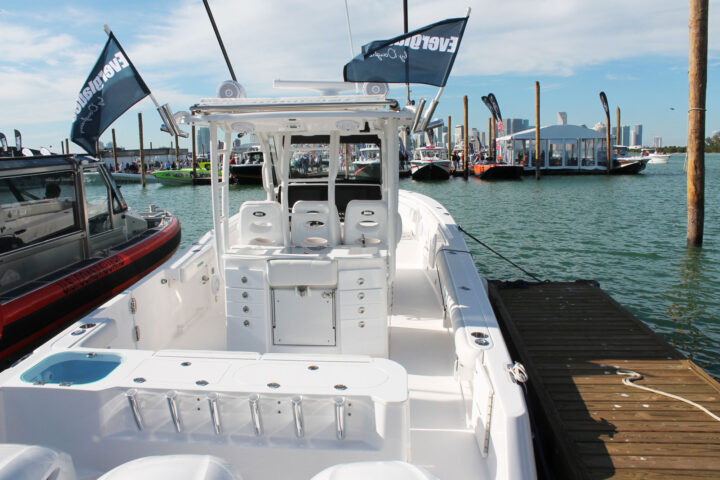
A center-console boat is built to put you where you need to be with minimal fuss. The exposed center console means the entire boat is your workspace, and there’s nowhere to hide mechanical complexity. As I throttle up heading toward the inlet, it’s smooth. The 25-footer feels neither oversized for a solo run nor underpowered. There’s a comfortable middle ground here that matters more than people realize.
The console sits high enough that I can see everything ahead and around me. No blind spots. The windscreen deflects spray without choking off the view, and the helm is tight and responsive without being twitchy. I’m making good time, burning fuel efficiently, and the boat’s tracking straight into a light chop without drama.
This is what the weekday crowd doesn’t appreciate: the 25-foot size is the Goldilocks of boats. Big enough to handle conditions, small enough to actually pilot solo without feeling like you’re wrestling something.
About 30 minutes later, I’m at the fishing grounds and I’m dropping anchor. This is where the real difference shows up. The open deck design means I have room to move, set up rods, and manage a cooler without playing Tetris. The gunwales are the right height; not so tall I’m fighting to reach over them, not so low that I’m worried about any kind of sea state.
The cockpit is clean, with no clutter and no wasted space. If you’ve ever fished off a boat where the layout felt like it was designed by someone who’d never actually fished before, you know what I mean. This doesn’t feel like that.
I hook into a nice mahi-mahi about an hour into the bite, and I’m struck by how much confidence the boat gives you. The stability is there without being sluggish. The rail height is practical. Everything feels like it was designed for the person actually doing the fishing, not by committee.
Midday: When the Crew Shows Up
Around 10:30, my family shows up at the ramp. My wife and two kids pile into the second truck, and I head back in to pick them up. This is the part where boats often fall apart; that transition from solo operation to family mode.
However, the 25-footer has a wide open deck that doesn’t feel cramped when five people are aboard. There’s a proper shade option built into the hardtop, something I’d honestly never appreciated until I’ve sat under it in full sun. The kids immediately head forward to the bow, which is spacious enough that they’re not literally in each other’s laps, but not so far from the console that we lose sight of them. That balance is more difficult to engineer than it sounds.
We cruise over to a sandbar a couple of miles down, and the boat tracks smooth in the afternoon sea. There’s room to move around the console without everyone rubbing elbows. My wife sets out lunch and it doesn’t feel ridiculous to actually sit down and eat; the deck is configured so you can do that without half the family crouching. We’re not pretending this is a luxury yacht.
When watching the kids hang their feet off the bow and my wife reading under the hardtop, what strikes me is that this boat scales with you. Riding solo, you’re efficient and focused. With a crew of five, it’s functional and relaxed. There’s no version of this day where I’m thinking, “I wish we had a different boat.” No one feels cramped, frustrated or is wishing we’d stayed home.
Afternoon: The Versatility Test
In the late afternoon, the wind picks up a bit and the sea state improves. A friend with a jet ski shows up (we’d planned this), and suddenly the boat becomes a tow platform and a home base for some water sports.
This is where the open deck really earns its keep. The 25-footer’s got towing capacity and the right configuration for it. There’s nowhere else to be on the boat while someone’s behind it; the seating at the console, plenty of sight lines, and the deck space means kids watching their friend up on the ski aren’t wedged into a corner. The boat’s stable enough in the tow that you’re not fighting it, responsive enough that you’re not overcorrecting. I do this for an hour, and it works.
If you want to see what the format looks like at the premium end, the 25 foot center console lineup from Regulator is worth a look; it’s the benchmark a lot of buyers use when comparison shopping. However, the format itself is the winner. It’s been the go-to for decades because it actually solves for what people want to do on the water.
Late Afternoon: Cruising Home
By 4:30, the sun’s starting to lower and we’re heading back to the ramp. The boat’s running light, the gear is secured, the cooler is nearly empty, and everyone’s tired but happy. The cruise back is smooth and uneventful, which is exactly how you want it.
One of the things that hits me on the ride back is how little I’ve thought about the boat itself all day. I haven’t worried about reliability. I haven’t dealt with mechanical issues. I haven’t felt like something was about to break. That’s actually the mark of good design; you don’t notice it, you just notice that the day worked exactly like you wanted it to.
Why 25 Feet Is the Sweet Spot
Here’s what today really taught me: a 25-foot center console sits in this perfect zone that bigger boats abandon and smaller boats can’t quite reach.
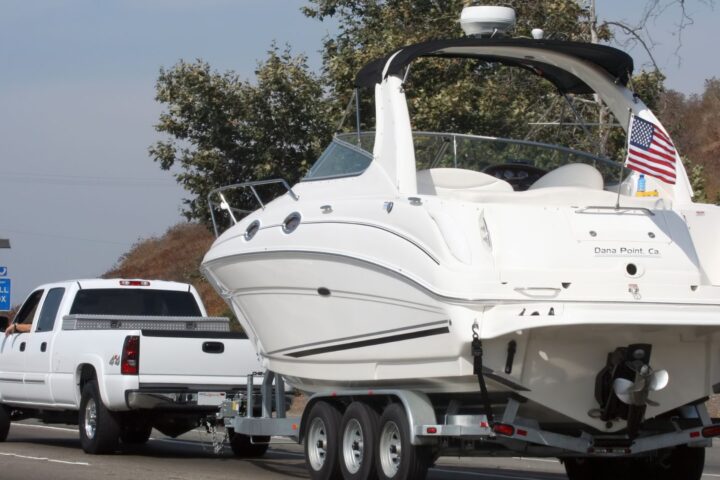
You can put this boat on a proper trailer, get it behind a three-quarter-ton truck, and move it. That means you’re not locked into one ramp, one area, one set of conditions. You’ve got geographic flexibility, you can chase the bite, and you can explore new water.
It’s also offshore-capable. This isn’t a bay boat pretending to be more than it is. The hull design, the power available, the seakeeping; this boat will go offshore and handle real conditions. You can fish in demanding water and run in choppy seas without being restricted.
You’re not spending half a million dollars or financing a decade of payments. There’s a real option for the person who wants a legitimate boat without leveraging their retirement. That matters.
Flexibility is another benefit. One day it’s a fishing platform, and the next, it’s a family cruiser. It can be a watersports base, or it could be used for a sunset run with your spouse. The boat doesn’t impose limits; instead, it responds to how you want to use it.
The Questions That Actually Matter
If you’re in the market for a center console and you’re thinking about the 25-foot range, here’s what I’d actually look for based on today:
- How much shade is built in? You can’t add a hardtop later without it feeling like an afterthought. Figure out if the design supports your actual use case; sunny climates versus overcast regions matter.
- What’s the deck layout when it’s empty? Walk the boat alone. Stand where you’d fish. See if it feels right. Deck design is everything, and you can’t get a feel for it with a sales rep talking in your ear.
- Can you actually manage the boarding? I’m not talking about elegance. I’m talking about getting a six-year-old or a parent with mobility issues in and out without it being a production. Test it in realistic conditions.
- What’s your real power requirement? More power means more fuel burn and bigger engines that need more maintenance. Enough power means the boat’s efficient and fun. Be sure that you know the difference.
- Can you physically manage this boat alone if you need to? Not every day is a family day. If you’re buying solo flexibility, make sure the boat supports it.
The Honest Takeaway
I’m sitting at the ramp now, watching the sun turn the sky pink and orange. The boat’s getting loaded back on the trailer. My wife and kids are snacking on the last of the provisions. Everyone’s sun-tired and happy.
A 25-foot center console isn’t universally perfect, but for the band of people who actually want to use a boat, it’s hard to beat. It’s the format that shows up for everything. It scales with your ambitions, and it doesn’t apologize for what it is. That’s worth more than whatever marketing copy sounds best in the showroom.
Next time you’re shopping, find one and spend the day on the water with it. Fish, cruise, bring family, try towing, run in real conditions. That’s when this format stops being theoretical and starts being obvious. The water is waiting.